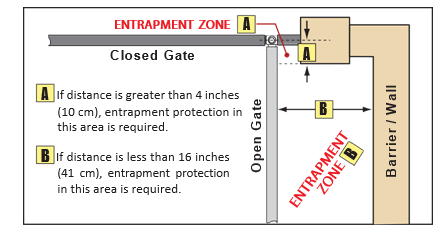
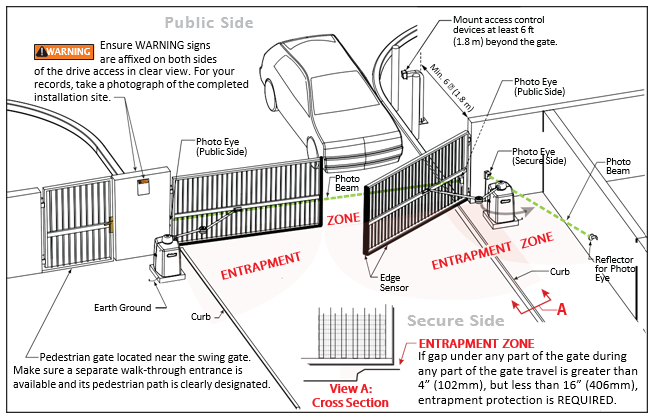
Swing gate requirements
Only install the operator on gates used for vehicular traffic. Be sure to direct pedestrians to a separate entry and exit. Refer to the illustrations. The gate site must be designed so persons do not come in contact with the vehicular gate while it is moving. Signs must be posted to warn pedestrians to stay clear of the gate’s entire travel path. A separate pedestrian entry/exit must be clearly visible and promote pedestrian usage
Edges of gates
Gates must have smooth bottom, leading, and trailing edges; no protrusions should exist. If gate hardware or sensors protrude, they must have smooth surfaces free of any sharp cutting edges that do not exceed ½ inch (13 mm) beyond the base of the gate.
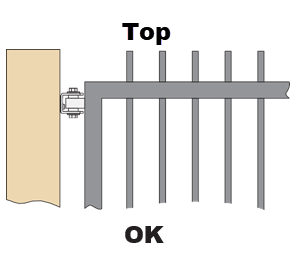
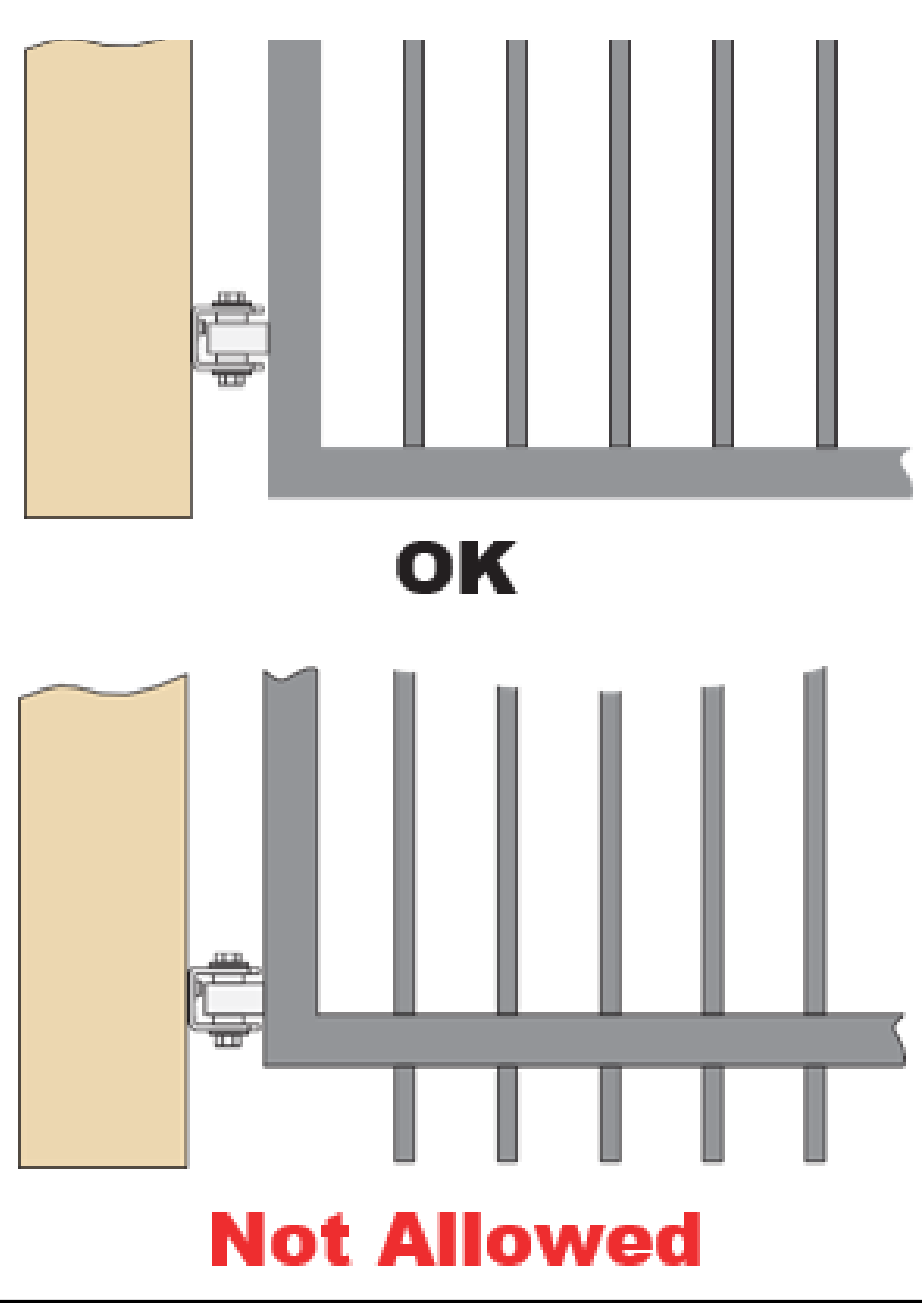
Hinge mount location: entrapment considerations