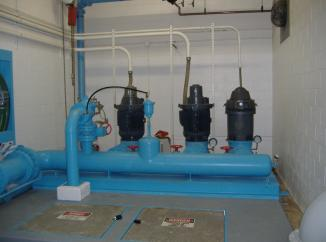
at Springhouse
Lead Educational Information
If present, elevated levels of lead can cause serious health problems, especially for pregnant women and young children. Lead in drinking water is primarily from materials and components associated with water service lines and home plumbing. Oakwood is responsible for providing high quality drinking water but cannot control the variety of materials used in plumbing components. When your water has been sitting for several hours, you can minimize the potential for lead exposure by flushing your tap for 30 seconds to 2 minutes before using water for drinking or cooking. If you are concerned about lead in your water, you may wish to have your water tested. Information on lead in drinking water, testing methods, and steps you can take to minimize exposure is available from the Safe Drinking Water Hotline at 800-426-4791 or at http://www.epa.gov/safewater/lead.
Per the Lead and Copper Rules, Public Water Systems were required to develop and maintain a Service Line Inventory. A service line is the underground pipe that supplies your home or building with water. To view the Service Line Inventory, which lists the material type(s) for your location, you can visit the J. David Foell Public Works Center, 210 Shafor Boulevard.
About your drinking water
The EPA requires regular sampling to ensure drinking water safety. Oakwood conducted sampling for bacteria, chlorine, nitrate, total trihalomethanes (TTHM), haloacetic acids (HAA5) and lead and copper during 2025. Over the past three years, samples were collected for a total of 125 different contaminants, most of which were not detected in the City of Oakwood’s water supply. The Ohio EPA requires Oakwood to monitor for some contaminants less than once per year because the concentrations of these contaminants do not change frequently. Some of our data, though accurate, are more than one year old.
As the data shows, Oakwood complied with all Maximum Contaminant Level (MCL) standards for drinking water during 2025. Oakwood softens its water from approximately 27 grains per gallon to an average of 12 grains per gallon.
In 2025, Oakwood had an unconditioned license to operate the public water system as issued by Ohio EPA.