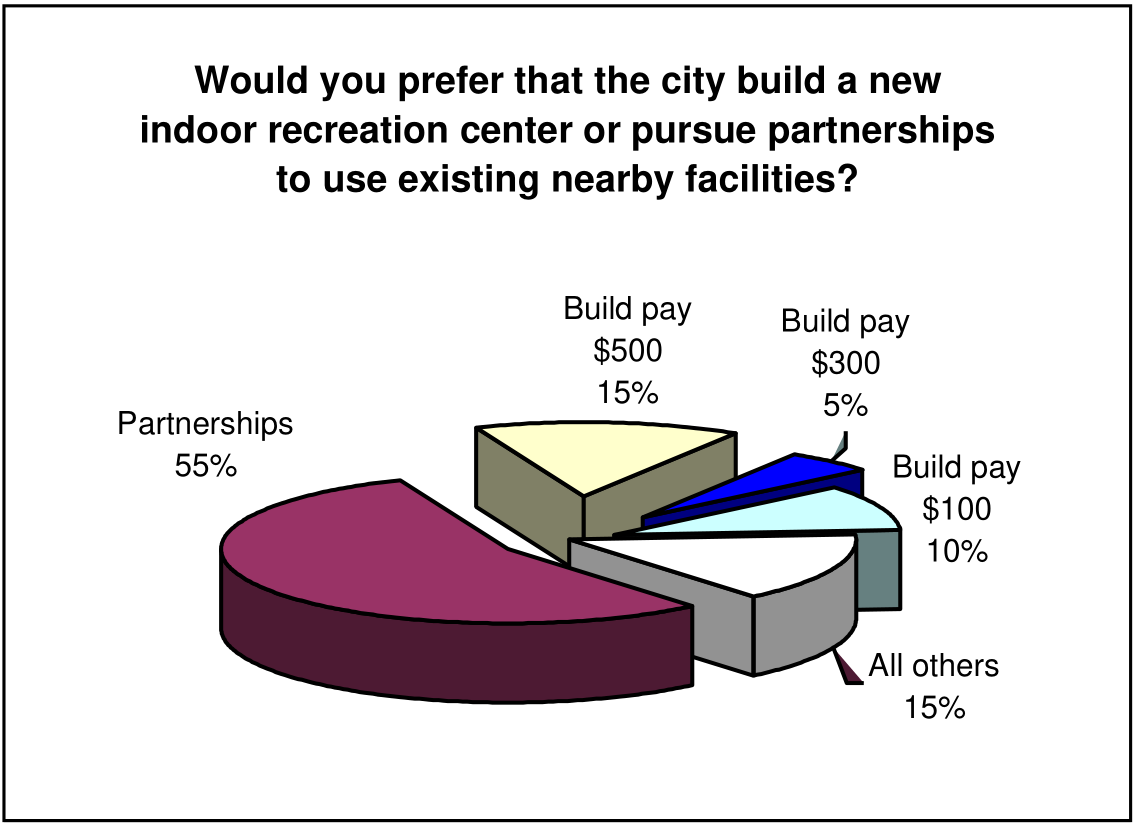
Everyone who preferred that the city build a new indoor recreation center (28 percent of those interviewed) and those who would like the city to pursue both options (6 percent of those interviewed) was asked if they would be willing to pay an additional $500 annually to build and access that facility. Fewer than half (46 percent) would pay that amount – a group that accounts for fifteen percent of all voters interviewed.
People who want the city to build a new facility, but were unwilling to pay $500 annually, were asked if they would pay $300. Only twenty-six percent agreed that they would pay $300. That group accounts for five percent of Oakwood’s voters.
Finally, residents who want the city to build a new recreation center but would not pay $300 annually to build and use such a facility were asked if they would pay $100. Seventy percent agreed that $100 would be acceptable. That group accounts for ten percent of the residents polled.
One point worth noting is that this discussion of a new recreation center did not specify a location for such a building. The level of support would likely be impacted if a specific location had been identified, especially if the construction did not involve the demolition of any current Oakwood properties.
The city of Oakwood comprehensive plan
Over the past year, the city of Oakwood has been engaged in updating its comprehensive plan and developing new plans where required. A majority (65 percent) of the people interviewed was aware of the planning process and eight percent have been involved in some way.
Interestingly enough, women were more likely to be aware of the planning process (69 percent) than were their male counterparts (59 percent).
Residents over the age of twenty-five were more aware of the comprehensive planning efforts than were those in the youngest age group.