LIVING WITH LONG COVID
2. Contextual Support:
The other factors that contribute to the intensity and nature of Long COVID’s impact on a person’s life can be described comprehensively as “contextual support,” also referred to as “social determinants of health.” These are conditions that affect a wide range of health, functioning, and quality-of-life outcomes and risks.15 In this report, contextual support describes a range of resources that may or may not be available to someone, and barriers to health care, support, and overall living stability.
These factors can be organized across several different “levels,” depicted below and described to the right.
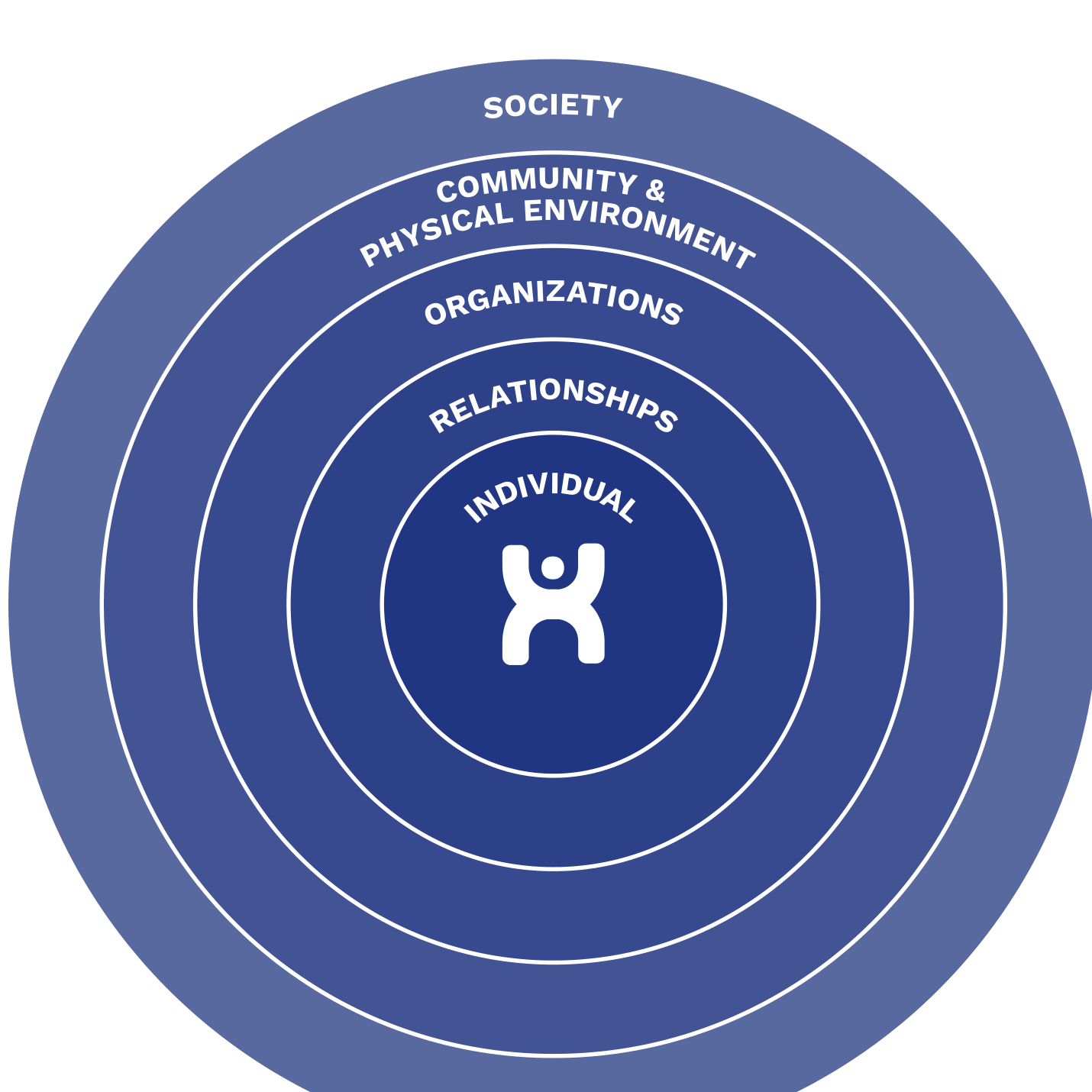
Individual
Personal characteristics, skills, and other factors- Health literacy.
- Capacity to advocate for yourself in health care, workplace, and educational settings.
- Pre-existing health conditions and co-morbidities.
- Financial stability.
- Languages spoken.
Relationships
Family, friends, and other social connections- Presence of someone who can serve as a supportive caregiver, if needed.
- Presence of a reliable support network of family and friends.
- Participation in online or in-person affinity groups.
Organizations
Schools, workplaces, and other groups- Job stability and flexibility.
- Ability of employers and school administrators to provide reasonable accommodations and modifications.
- Insurance coverage.
- Presence of support organizations (e.g., faith-based institutions) that offer various forms of support.
Community and Physical Environment
Housing, public spaces, and neighborhood characteristics- Access to stable, affordable, accessible housing.
- Access to physical, mental, and behavioral health care.
- Access to healthy foods.
- Access to disability and other food, rent, and bill payment assistance programs.
Society
Policies, cultural norms, and politics- Stigma and bias towards one’s identity (e.g., as a person with a disability, a person of color, or as a child).
- Structurally discriminatory or inequitable practices and policies that under-resource communities and regions of health care, healthy food, and safety.
- Politicization of COVID-19 and level of awareness of Long COVID.