Actual Journey
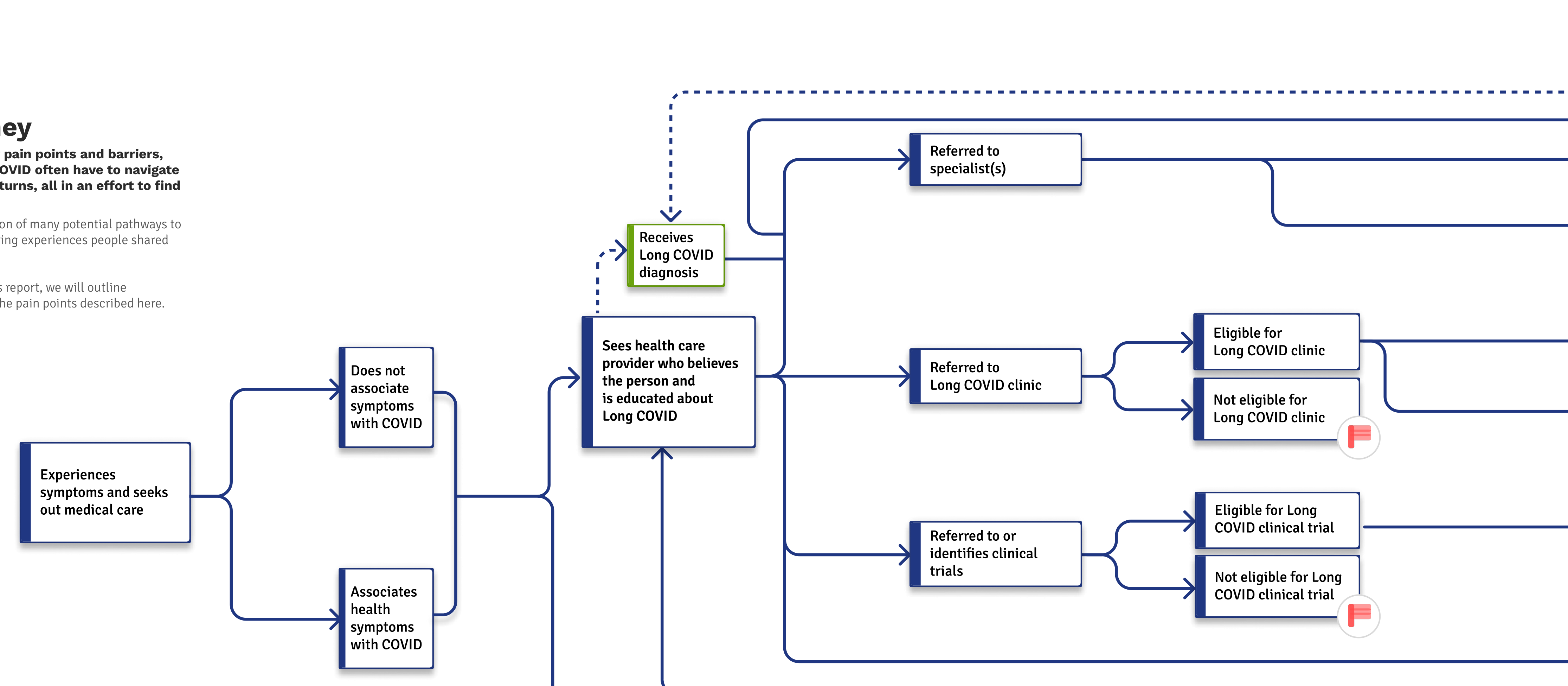
As a result of these many pain points and barriers, people living with Long COVID often have to navigate a labyrinth of twists and turns, all in an effort to find answers and relief.
This map shows the aggregation of many potential pathways to care and is based on the differing experiences people shared with us during our research.
In the following section of this report, we will outline opportunities for addressing the pain points described here.
Introduction.
No two experiences seeking out answers and treatment for Long COVID-like symptoms are the same. Not only do symptoms vary wildly from one person to the next, which can complicate the diagnosis process, but each person can also face a range of challenges navigating the health care landscape in search of solutions.
Associating Symptoms with COVID-19 and Long COVID.
Let's start at the onset of symptoms. Sometimes, a person will develop symptoms during their initial COVID-19 infection that do not go away. These individuals are likely to associate their symptoms with COVID-19. However, for others, their symptoms may develop after the initial infection subsides. For these people, they may not immediately associate their symptoms with COVID-19.
Being Believed and Supported, or Misdiagnosed and Dismissed.
Sometimes, a person will not seek out medical guidance. This may be the case if a person’s symptoms are mild, or if they attribute them to something else, like stress or aging. However, if someone does seek out care, they likely start by making an appointment with their primary care provider, visiting an urgent care center, or going to the emergency room. Depending on the provider they see, very different outcomes are possible.
If they see a provider who does not believe the person’s description of their symptoms or who is not knowledgeable about Long COVID, the person may either be dismissed entirely, or they may be misdiagnosed. If they are dismissed and told there is nothing wrong with them, they may give up seeking treatment or look for another health care provider. If they are misdiagnosed, a person may waste time and resources trying unhelpful treatments and taking useless medications. Not seeing any improvement, they may either give up seeking treatment, or look for further help.
Unfortunately, given how little is understood about Long COVID and infection-associated chronic illnesses in general, people with Long COVID are frequently dismissed or misdiagnosed. This leads to mounting frustration and stress for many people with Long COVID.
Not everyone is dismissed or misdiagnosed, however. Some are fortunate to meet with a health care provider that does believe them and is knowledgeable about Long COVID. In the best case scenario, a provider will provide a Long COVID diagnosis, and request additional testing to rule out other possible causes. This rarely happens, however. More often, the provider will refer the patient to one or more specialists for additional testing.
Seeing a String of Specialists.
The next step for many people with Long COVID is a looping experience involving multiple visits to specialists as they look for answers to their symptoms. Securing appointments with specialists is in itself a frustrating experience for many people with Long COVID: their insurance may not cover or approve them, they may not be able to afford them, and the wait time for seeing many providers is months long. Due to testing insufficiencies, tests conducted by specialists often produce normal results, meaning that abnormalities are not detected. Normal results often lead to recommendations to see other specialists, and people with Long COVID must continue their frustrating search for answers.
Attending Long COVID Clinics.
At some point, be it after their initial visit with a primary care provider, or further along into their string of specialist appointments, a person with Long COVID may be referred to a Long COVID clinic. Long COVID clinics are intended to deliver multidisciplinary health care services to people with Long COVID. Here again, however, many people with Long COVID face barriers similar to those described already, including a lack of adequate insurance coverage and cost prohibitiveness. Wait times for clinics can be so long—sometimes up to a year—that they may discourage a person from making an appointment to begin with.
Accessing Treatment.
Throughout this journey, it is possible that a person with Long COVID is prescribed or able to access helpful treatments and medications. It is also highly likely that the treatments and medications they are given do not provide relief. Because so little is understood about Long COVID, even someone with the best health care team and most comprehensive insurance coverage may still feel like they are hitting dead ends if their health does not improve. At this point, they may look for clinical trials to participate in, they may continue to seek medical guidance from providers, or they may give up the search and focus on accepting their health condition.