Opportunity Area 3:
School and Workplace Accommodations
Insight
When trying to work or go to school, many people with Long COVID and their caregivers are left to negotiate for accommodations on their own.
- Once someone with Long COVID qualifies as disabled, under federal civil rights laws their workplace and educational setting must provide “reasonable modifications.” However, many workplaces and educational settings are unprepared for the collaborative process of figuring out what changes and adjustments can help someone continue to do their job and perform at school.
- Many people with Long COVID are denied temporary or permanent work or school accommodations, which means they may have to reapply every few months, and struggle to meet performance standards at work or at school. They may decide they must quit or leave, and in some instances, they may even be fired. While not required, lacking a positive COVID-19 test or Long COVID diagnosis can make the request for accommodations even harder to legitimize.
- Those with Long COVID symptoms but without an official diagnosis or positive COVID-19 test often find themselves, and their caregiver, if applicable, engaging in conversations of explanation, feeling the need to justify their situation in hopes of gaining understanding and empathy for their need for accommodations.
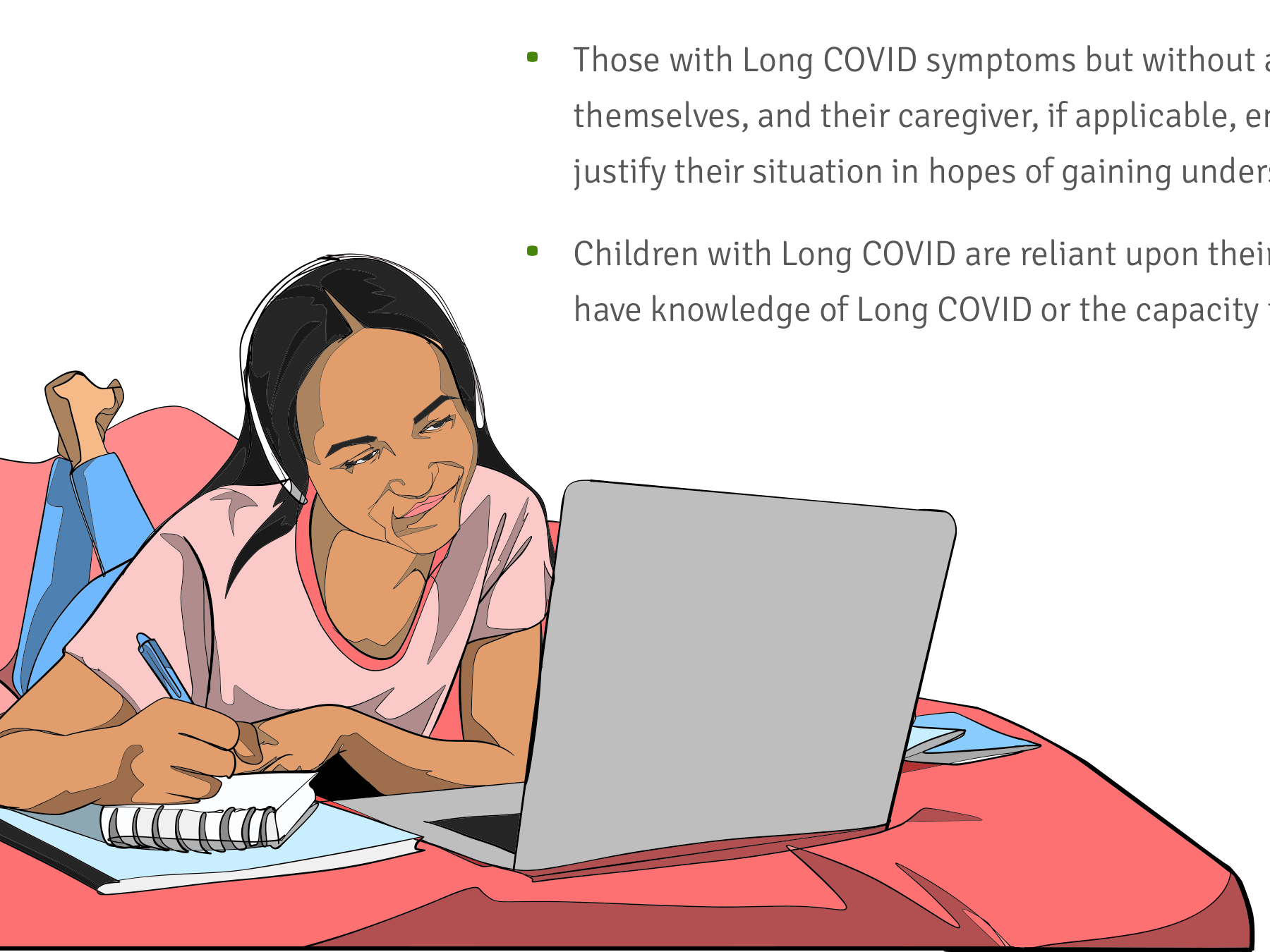
- Children with Long COVID are reliant upon their parents or guardians, who may or may not have knowledge of Long COVID or the capacity to successfully advocate on their behalf.