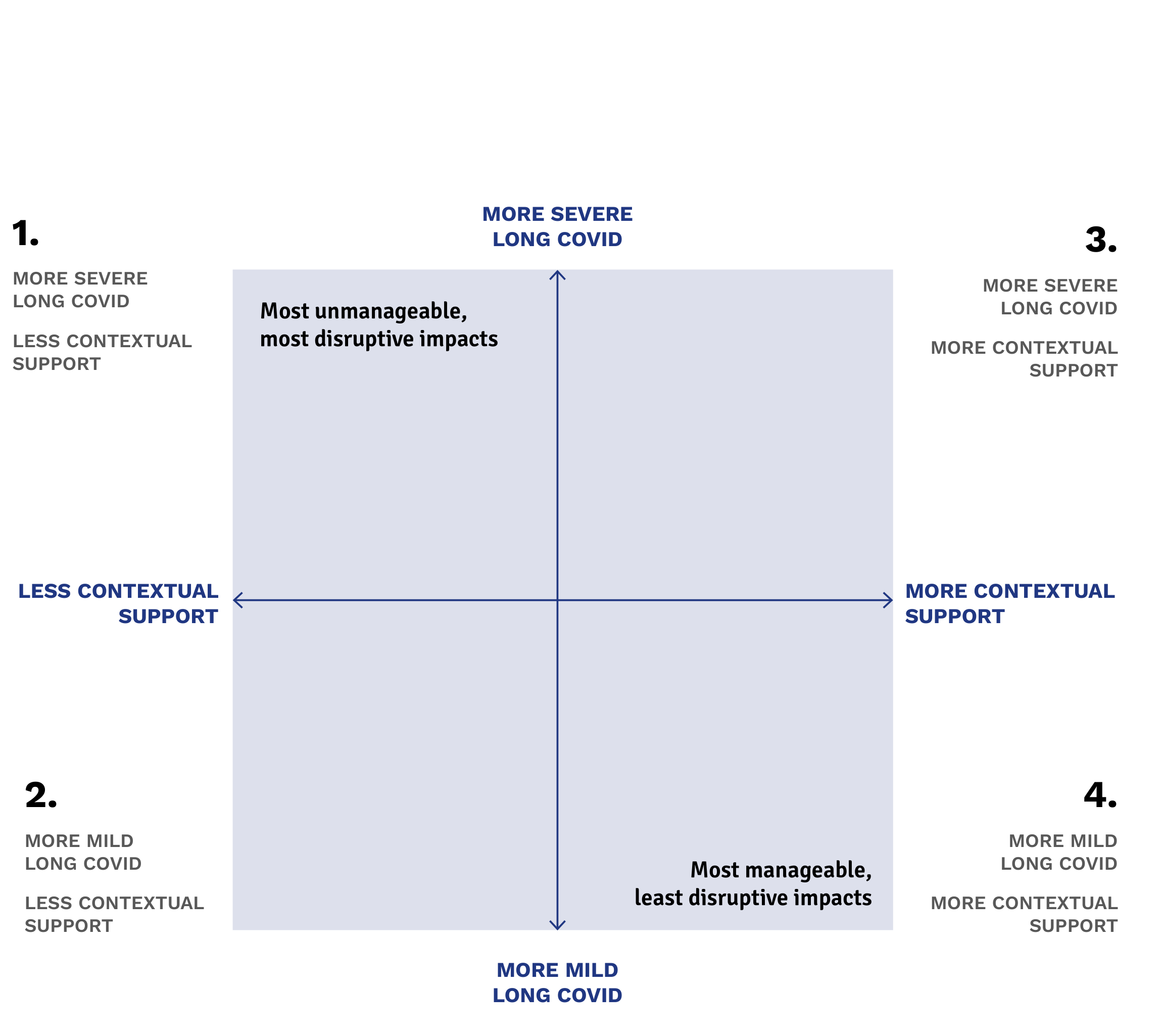
While no two experiences with Long COVID are the same, we can begin to break down different experiences according to these factors to illuminate the differences and commonalities across people’s experiences with Long COVID and its impact on their lives.
1. More Severe Long COVID +
Less Contextual Support
With less access to resources and fewer supports available, a severe case of Long COVID can send far-reaching shocks through someone’s life and have devastating impacts.
Challenges these individuals face
- They need robust medical assistance but have a more difficult time accessing care for a number of reasons, including being under- or uninsured, having fewer financial resources, or lacking transportation.
- They need a constellation of assistance programs but may have a more difficult time applying for aid, given their symptoms and unstable context.
- Their ability to stay employed or in school is directly affected, leading to increased financial instability.
- Their illness may affect their housing stability, leading to an increased chance of eviction or homelessness.
- They may have a higher prevalence of morbidities and pre-existing conditions, particularly in unhoused individuals, which can complicate diagnosis and treatment.
“I lost my job. I lost my house. I lost my roommates. I couchsurfed for five months after that. I didn’t have the funds [for an apartment], because I had already been living paycheck to paycheck. ... I had worked in entertainment—and then entertainment died. There was no future.”
—Tara, recent graduate, theater producer, and person with Long COVID