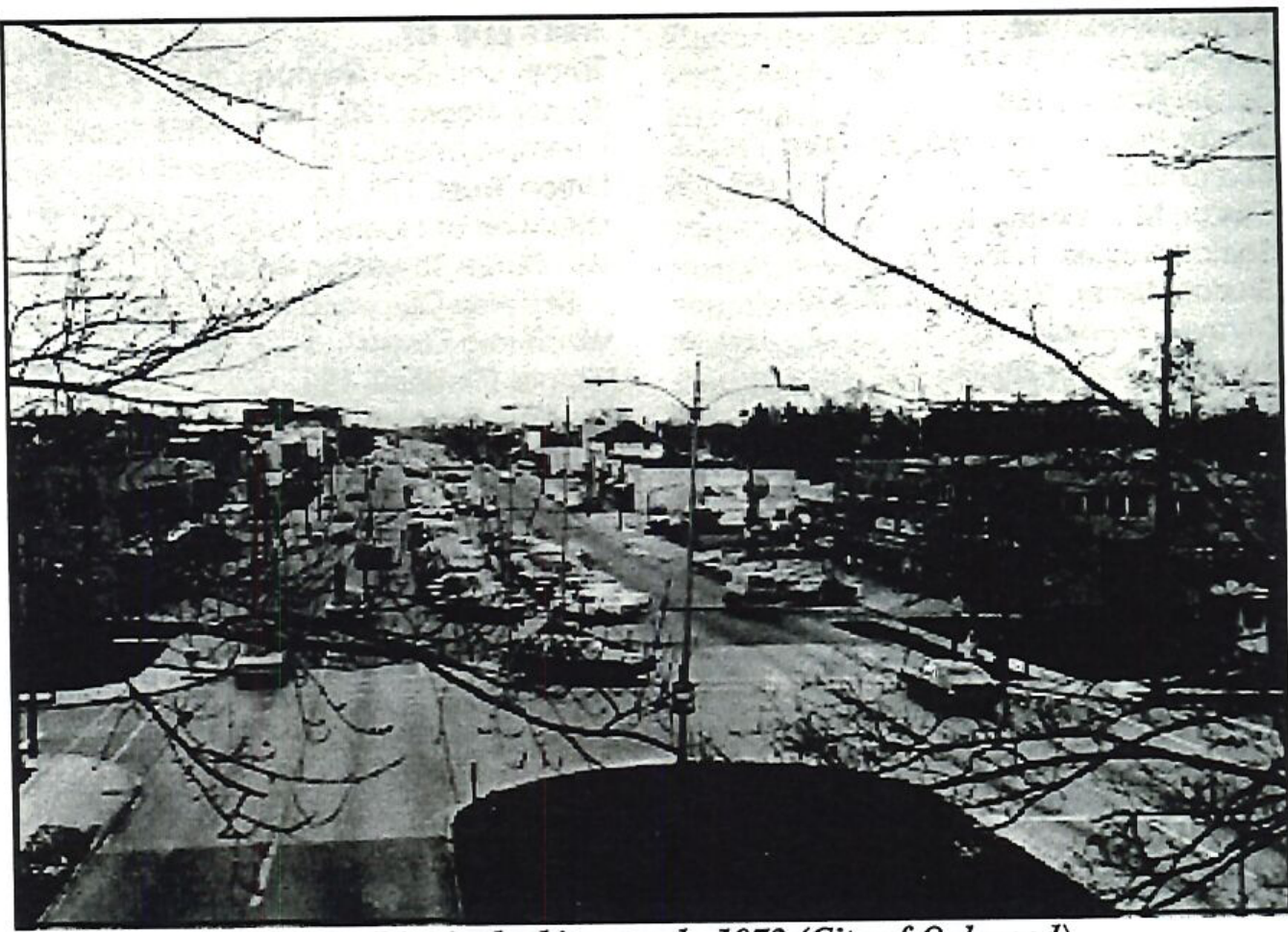
In the late ‘60s, the City of Oakwood retained a firm of traffic engineers, which redesigned Far Hills Avenue to accommodate heavy through traffic and retail parking that had overloaded and endangered the residentially planned street.
The changes, implemented in 1973, marked the beginning of the third distinct stage of development, which began in the ‘70s and continued through the ‘80s. Very few of the businesses were owned and operated by local individuals, specialization of blocks in particular business types intensified, and few new buildings were transferred into businesses, with the closure rate exceeding the opening rate. Vacancies skyrocketed, with the vacancies often leading to permanent closure or demolition of the building for parking or the erection of a new building. Many of the service trades required specific structural or equipment provisions, such as bank drive-throughs and waiting rooms and changing rooms for doctor’s offices. The trend of replacing one business with another business of the same type requirements accommodated the high, new turnover rate of business with some continuity.
The ‘80s saw some shift back toward individually owned service firms and the explosion of financial services throughout the area. The modification of through traffic and parking patterns solidified the usage of the area as retail and effectively allowed for the density of vehicular traffic. The scale of the area changed as the signs and the buildings changed, alienating the pedestrian, and further confusing the character of the community.
In 1993, the City of Oakwood retained a Columbus landscape architecture and land planning firm to study the current effectiveness of the traffic changes in the business district and to develop recommendations where needed. Their recommendations addressed the issue of character in the area, encompassing coherent signage, landscaping materials, and placement, traffic visibility, and general suggestions for formatting future renovations and development of the businesses, approaching the problem from a community character standpoint. While the study put
forward general suggestions concerning the restoration of scale, the primary focus of their study and recommendations was the character of the business area.
In 1995, the City of Oakwood implemented a number of the streetscape improvements recommended in the 1993 study. These improvements were designed to update and further enhance the 1973 streetscape project.
In 1996, the City of Oakwood, in an effort to ensure that future development implemented all recent public improvements, retained Woolpert to address the issue of scale and create specific exterior design guidelines.