History of the Business Districts
The Far Hills Avenue Business District
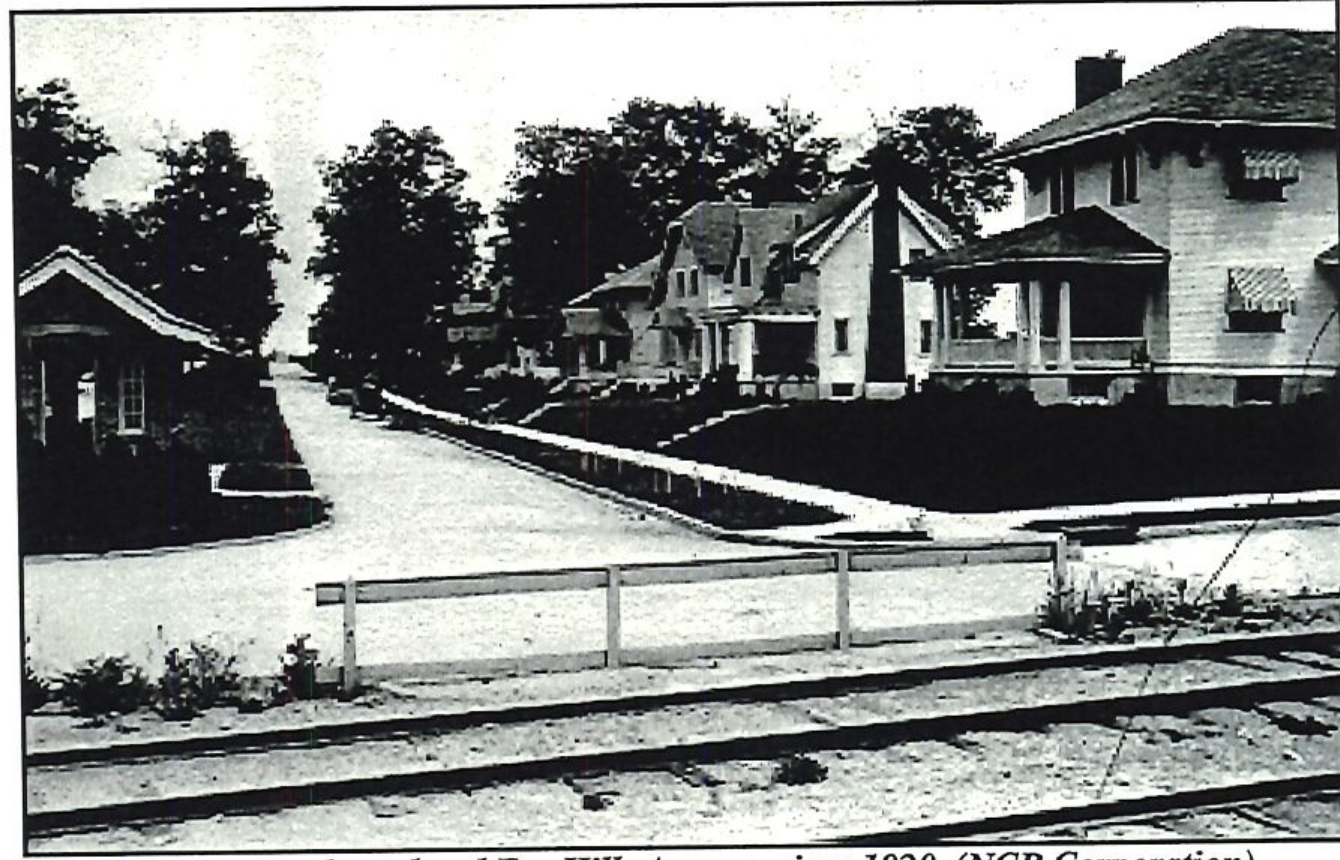
Perhaps the most influential citizen, both of Oakwood and the entire Miami Valley, was John H. Patterson, founder of the National Cash Register Corporation and manufacturing innovator. Patterson’s summer home, The Far Hills, would inspire the name of Oakwood’s primary thoroughfare, Far Hills Avenue.
Along this thoroughfare in the mid 1920s, residents started businesses geared toward serving their neighbors. Houses on the 2400 and 2500 blocks became the sites of medical, automotive and construction-based service businesses, and small, neighborhood grocery stores. These businesses were owned and operated by individuals, thus retaining the community character and pedestrian scale inherent in a residential district. During this time, more of these businesses opened than closed, and none of the buildings reported as businesses were ever vacant.
This trend continued into the ‘30s and ‘40s, doubling the volume of businesses that opened and closed, with no reported vacancies. Houses on the 2300 to 2500 blocks of Far Hills Avenue were converted into mostly service-based businesses, individually owned, featuring personal, medical, automotive and construction businesses, and grocery and personal retail stores. During the ‘40s, similar retail businesses started opening on the 2600 block, selling groceries and house goods.
The development of the Far Hills Avenue Business District began to change in the ‘50s; development accelerated, many of the buildings housing service firms were taken over by retail businesses, general ownership shifted toward large businesses and franchises, and the first office building was built on the 2600 block. The 2400 block started to see a concentration of home and personal services, and the 2500 block started to specialize in medical service. The first vacancies occurred,
lasting a short while between business occupancies. The closure rate doubled from that in the ‘40s, the opening rate tripled, and vacancies numbered about the same as the closures.
The rate of development eased in the ‘60s, with the number of openings equal to the number of vacancies and of closures. The shift toward large rather than individually owned businesses continued, as did the shift toward retail businesses, with further specialization of the 2400 block in home construction and personal services and the 2500 block in medical service. The 2300 block began to accumulate a disproportionate number of home and personal retail stores, the influx of banks began in the 2400 block, and several large scale office uses occurred on the 2700 and 2800 blocks.
The character of the area lost cohesion, becoming somewhat confused, and the buildings either addressed pedestrians or vehicles in scale, alienating the user group they did not address, and creating a conflicting, changeable boundary with the neighborhoods that border the area.