- buildings are clad in cold white painted clapboard siding or red brick
Residential-type structures that are connected to other structures include Buildings 2523 and 2525. Their first-recorded uses as businesses were in the mid 1920s, and the '50s. Features of these buildings include the following:
- service-oriented
- mainly pedestrian scale signage
- where signage is freestanding, it is vehicular in scale
- maintains street edge
- single entry
- some entries step up from street level
- doors are wood with glass panes
- windows are residential in scale
- where awnings exist, they are placed solely over the entryway
- all buildings have gable roofs, though, in one case, the roof is hidden by a false facade
- landscaping is in-ground
- buildings are red brick
- exterior trim is white or dark brown
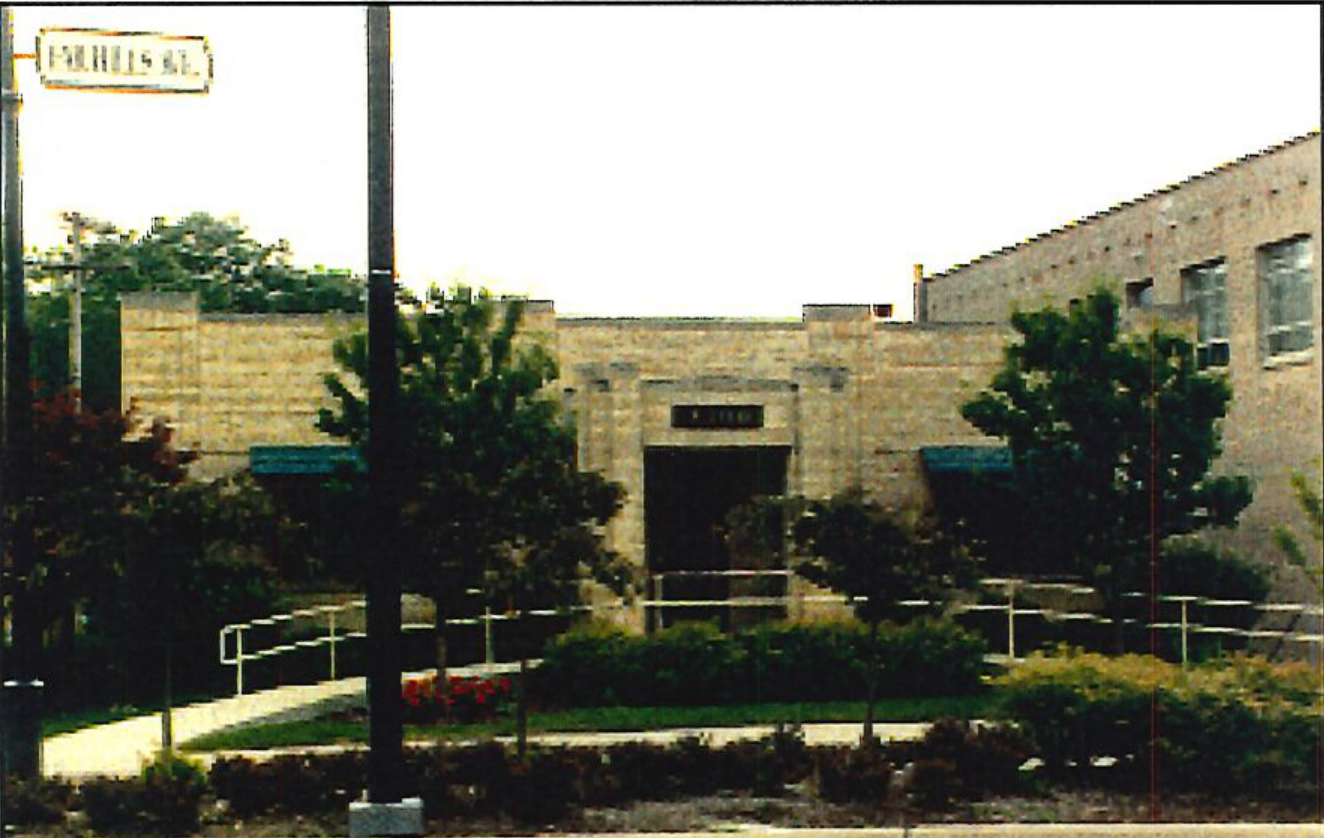
Commercial. Buildings in this type include Buildings 2300, 2309, 2331, 2401, 2507, 2527, 2567, 2705, 2710, 2720, and 2800. These are free-standing buildings built for business purposes, one to two stories tall, and of the same scale as neighboring residences. Their first recorded uses as businesses were in the late 1930s, '40s, '50s, '60s, and '80s. Their features include the following:
- single story, with one exception
- half of the signage is perpendicular and freestanding, the other half is flush and attached to the building
- many stores have multiple signs
- maintains street edge
- single entry per store, on street level
- wood or metal frame door with glass panels
- residential scale or display-type windows
- mostly flat roofs
- 2/3 of buildings have awnings over door or window openings
- 1/5 have a porch-type structure
- mostly in-ground landscaping
- buildings are red or warm tan brick (exception: one building is done in white painted clapboards intended to mimic a house, and one building used blue painted concrete masonry units)
- most trim is blue, brown, or white (exception: one case of green and brass, one of grey)
Buildings 2311, 2314, 2319, and 2322 are also in this category. These buildings were originally built as businesses, residentially scaled, one to two stories tall, using shared wall construction. Their first recorded business use was in the late 1930s, '50s, and early '90s. The following features characterize this building group: